Last week brought welcome news: the Financial Conduct Authority signaled it's prepared to revisit the UK's approach to prediction markets. This isn't a small regulatory tweak. It's a fundamental question about how financial regulators should respond to innovation when prohibition has already failed.
The Problem With Prohibition
In 2019, the FCA introduced a retail ban on binary options, a blunt instrument designed to protect consumers from products deemed "gambling-like" and prone to harm. The rationale was straightforward: these products were risky, confusing, and generating losses for unsophisticated retail investors.
Fair enough. Except the world has moved on.
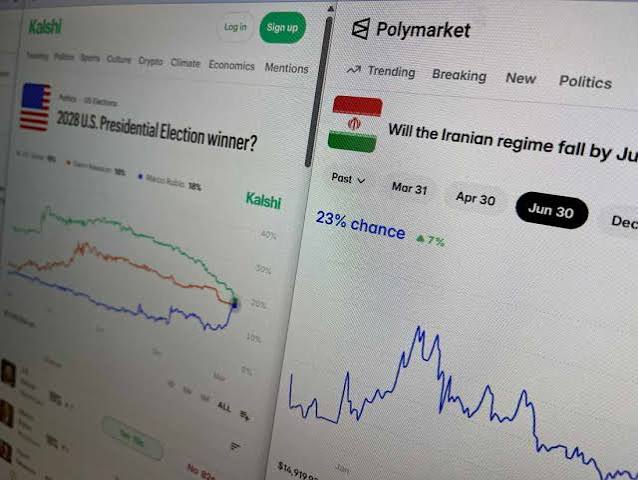
Prediction markets have exploded in popularity, particularly in the United States, where platforms like Polymarket and others have demonstrated genuine appetite for structured, contract-based forecasting. These aren't fringe products anymore. They're becoming mainstream infrastructure for how people form beliefs about future events.
Meanwhile, the UK's ban remains in place, which solves nothing. It doesn't eliminate demand. It just redirects it offshore.
The Regulatory Paradox
Here's the uncomfortable truth about financial regulation: you can't ban your way out of innovation. Prohibition creates a vacuum, and that vacuum gets filled by less regulated alternatives. Consumers don't stop taking prediction market positions because the FCA said no. They find venues where they can.
The better question, the one the FCA is now asking, is fundamentally different: How do we allow innovation while keeping it inside a properly regulated perimeter?
That's not a license to ignore consumer protection. It's the opposite. It's saying: if people are going to access these products, we'd rather they do so under a framework with real licensing, consumer protections, market integrity oversight, and compliance requirements.
The Dual Licensing Reality
The UK already has the machinery for this. Prediction markets in the UK face a sophisticated two-pronged licensing regime:
- Financial Markets (FCA-regulated): Markets offering financial contracts, including prediction markets tied to asset prices, economic indicators, or financial benchmarks, require FCA authorization. These fall under MiFID II, EMIR, and associated rules designed to protect market integrity and investors.
- Sports and Politics (Gambling Commission-regulated): Markets predicting outcomes in sports or political events operate under the Gambling Commission's betting intermediary licensing regime, which includes player protection requirements, anti-money laundering controls, and operational standards.
This isn't light-touch regulation. It's robust, multipronged, and designed to handle different risk profiles.
The Third Option: Intelligent Framework Design
But there's an even more important opportunity here. Rather than just relaxing the binary options ban or shoehorning prediction markets into existing frameworks, the FCA could do something more ambitious: design a comprehensive regulatory framework specifically for prediction markets.
Such a framework would need to address:
- Licensing standards proportionate to the market being predicted (financial vs. non-financial)
- Consumer protection requirements suited to prediction market mechanics (position sizing, leverage caps, liquidity safeguards)
- Market integrity controls (manipulation detection, surveillance, reporting)
- Segregation of customer funds and operational resilience
- Clear disclosure standards so consumers understand what they're trading and what risks they face
This isn't blue-sky thinking. Jurisdictions like the EU (through EMIR framework expansions) and even parts of the US have begun moving in this direction. The UK could leapfrog ahead with a truly modern approach.
Why This Matters for Fintechs and Operators
For compliance teams and regulatory affairs professionals in fintech and gaming, this signals something crucial: the FCA is thinking forward, not backward.
The regulator's willingness to revisit prediction markets, and to do so thoughtfully, suggests an institution interested in enabling legitimate innovation rather than simply prohibiting novel products. That's a cultural shift that matters.
It also means there's an opportunity for operators who are serious about compliance. If the FCA does move forward with a relaxed approach to prediction markets, first-movers who've prepared robust compliance frameworks will have a competitive advantage. Those expecting a light regulatory touch should prepare for disappointment.
The Market Is Already Here
Prediction markets aren't hypothetical. They're happening now. They're just happening offshore because onshore is too restrictive. Ava Prediction and other platforms are already serving UK consumers through regulatory arbitrage. The volume is there. The demand is there.
The only question is whether the UK will capture it, regulate it intelligently, and embed consumer protection inside the framework, or whether it will cede the market to less scrupulous jurisdictions that are already ahead.
What Needs to Happen Next
For this to work:
- The FCA needs to consult broadly with operators, compliance professionals, consumer advocates, and market participants to understand what rules would actually work.
- Rules need to be clear and proportionate: neither so loose that they invite a replay of 2019's consumer harm concerns, nor so restrictive that they recreate the status quo.
- The Gambling Commission and FCA need to coordinate, especially on the boundary between financial and non-financial prediction markets, where jurisdiction ambiguity currently creates compliance nightmares.
- Industry needs to engage seriously, not lobbying for exemptions, but demonstrating that prediction markets can operate safely under proper oversight.
The Opportunity
Prediction markets represent a genuine innovation in how financial and political information is aggregated. They're not going away. The UK has a choice: regulate them intelligently, or watch the market develop somewhere else.
For a fintech and compliance-focused economy, that's not really a choice at all.